 Menu
Menu Back
BackWaterfalls
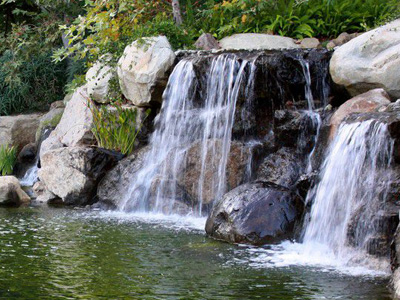 Waterfalls are more than decorative features-they are engineered landscape systems that combine moving water, elevation changes, natural stone, and surrounding landscaping to create a functional focal point within an outdoor space. When properly designed and constructed, a waterfall becomes part of the property's overall layout, guiding how water flows, how space is experienced, and how different landscape elements connect.
At Mystic Water Gardens, waterfalls are built as complete, integrated environments. Every project is approached from a design-build perspective, where grading, water circulation, structural stability, and visual flow are planned together from the start. Whether installed as a standalone feature or as part of a larger pond or landscape project, waterfalls are designed to feel natural, perform reliably, and hold up long-term in real outdoor conditions.
Types of Waterfall Projects We Build
Waterfalls can take many forms depending on the size of the property, elevation changes, and how the space is intended to be used. Our work ranges from compact installations that enhance patios and entry areas to larger, naturalistic systems that anchor entire backyard environments.Pondless Waterfalls
Pondless waterfalls are designed to deliver the sound and movement of flowing water without an exposed standing pond. Water recirculates through a hidden reservoir, making them ideal for properties where space is limited or where a lower-maintenance solution is preferred. These systems are often integrated into entryways, side yards, or patio-adjacent spaces, creating a strong focal point without requiring the footprint of a full water garden. More About Pondless Waterfall >>Backyard Waterfalls
Backyard waterfalls are built as part of larger outdoor living environments, often combined with patios, seating areas, gardens, and lighting systems. These installations are designed around how homeowners use the space-whether for entertaining, relaxation, or visual impact-and can vary from modest accent features to more immersive, multi-level designs. More About Backyard Waterfalls >>Cascading Rock Waterfalls
Cascading waterfalls use carefully placed natural stone to create multiple drops and transitions. These systems are designed to replicate the look of water flowing through a natural hillside, with each stone positioned to control water movement, sound, and visual texture. They are often used to introduce elevation and depth into otherwise flat landscapes.Stream & Waterfall Systems
Stream waterfalls extend beyond a single drop, creating a continuous flow of water that travels through the landscape. These systems are ideal for larger properties or areas with natural grade changes, allowing water to move through multiple sections before recirculating. They often connect different parts of the yard and create a more immersive, natural environment.Waterfalls Integrated with Ponds & Water Gardens
Waterfalls are commonly incorporated into koi ponds and water gardens to provide both visual movement and functional water circulation. In these systems, the waterfall plays a key role in oxygenation and filtration while also serving as a focal point within the broader waterscape design.Planning Waterfall Installations Around Real Property Conditions
Every waterfall project begins with a detailed understanding of the property. Unlike decorative features that can be placed almost anywhere, waterfalls depend on grading, water movement, and structural support. The way the land slopes, how water drains, and how surrounding features are positioned all influence how the system is designed.Elevation changes are one of the most important factors. Even on relatively flat properties, grade adjustments are often created to allow for natural-looking water movement. On sloped properties, waterfalls can be used to transition between levels, helping define usable outdoor space while controlling how water flows across the site.
Placement is also influenced by how the space is used. Waterfalls are often positioned near patios, outdoor kitchens, or seating areas where the sound of moving water enhances the environment. In other cases, they are used to anchor a landscape view or create a focal point visible from inside the home.
Construction Process & System Components
Building a waterfall involves much more than stacking stone and adding water. Each system is constructed with a combination of structural, mechanical, and environmental components that work together to ensure long-term performance.Excavation is the first step, creating the foundation for the feature and allowing space for basins, reservoirs, and plumbing. Proper excavation ensures stability and prevents settling or shifting over time.
Water circulation systems are then installed, including pumps, plumbing lines, and reservoirs. These components are carefully sized based on the scale of the waterfall to maintain consistent water flow and achieve the desired visual and acoustic effect.
Natural stone placement is one of the most critical phases. Stones are selected and positioned not only for appearance but also to control how water moves across surfaces, how it cascades, and how it sounds. Each placement decision contributes to the overall realism and durability of the feature.
Filtration and ecosystem considerations are also integrated into the design, particularly for waterfalls connected to ponds or streams. Proper filtration helps maintain water clarity, supports plant and aquatic life when present, and reduces long-term maintenance requirements.
Integrating Waterfalls with Landscaping & Outdoor Living
Waterfalls are rarely standalone features. They are most effective when integrated into the surrounding landscape and outdoor living design. Plantings, boulders, lighting, and hardscape elements all play a role in how the feature is experienced.Surrounding landscaping softens transitions between the waterfall and the rest of the yard, helping it feel like a natural extension of the environment. Strategic planting can frame views, provide seasonal variation, and enhance the sense of depth.
Lighting is often incorporated to highlight water movement and stone textures, allowing the feature to remain a focal point after dark. Hardscape elements such as patios, walkways, and retaining walls can be designed to work alongside the waterfall, creating a cohesive outdoor space rather than isolated features.
From Compact Features to Full Waterscape Environments
Waterfall installations can range from small, decorative elements to large-scale environments that define the entire landscape. Compact waterfalls are often used to enhance specific areas, while larger systems can include multiple drops, streams, and integrated ponds that transform the entire property.The scale of the project is determined by available space, elevation, and how the feature is intended to function within the landscape. Regardless of size, the goal remains the same: to create a natural-looking, durable system that enhances the property and performs reliably over time.
Built for Long-Term Performance
A well-built waterfall is designed to operate efficiently and maintain its structure over time. At Mystic Water Gardens, every installation is constructed with durability in mind-ensuring proper water flow, stable stone placement, and systems that can handle continuous use and changing outdoor conditions.By combining thoughtful design, precise construction, and high-quality materials, we create waterfall systems that integrate seamlessly with ponds, gardens, and outdoor living spaces. The result is a feature that not only enhances the visual appeal of the property but also adds lasting value and functionality.
Start Your Waterfall Project
Whether you're looking to add a compact water feature or build a complete outdoor waterscape, our team can design and construct a custom waterfall tailored to your property. From planning and excavation to final installation, we handle every phase of the project to ensure a cohesive, long-lasting result.Contact Mystic Water Gardens today on 818-424-6836 or via our online form to start designing a waterfall system that transforms your outdoor space into a functional, natural environment.