 Menu
Menu Back
BackXeriscape
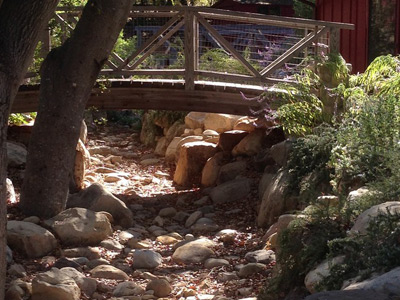
Xeriscaping is a landscaping method built around plants that need very little water, combined with irrigation and design choices that keep overall water use low. The goal isn't a yard that looks neglected to save water. It's a yard that still looks finished and lived in, just built to get there on a fraction of the water a traditional lawn and garden bed would need. As an award-winning, nationally recognized designer of 100% eco-friendly water features and landscapes, this is the kind of project we've built a real specialty around.
Xeriscaping vs. Drought Tolerant Landscaping: What's the Difference
These two terms get used interchangeably a lot, and there's real overlap between them. Drought tolerant landscaping usually refers to the plants themselves: species that survive on minimal water once established. Xeriscaping is the broader method. It includes plant selection, but also how the irrigation is designed, how the soil is prepared, where mulch or hardscape replaces turf, and how the whole layout is planned to need less water overall.
Put simply, every xeriscape uses drought tolerant plants, but a drought tolerant plant list on its own isn't a full xeriscape design. If you already know you want the full design and installation, native plants, drip irrigation, decomposed granite paths, our drought tolerant landscaping page walks through what that actually looks like.
What a Xeriscape Design Usually Comes Down To
A well-planned xeriscape project tends to involve a handful of decisions, made together rather than one at a time:
- Planning around your yard's actual conditions, sun exposure, slope and soil, instead of applying a generic plant list
- Grouping plants with similar water needs together, so nothing gets over- or under-watered
- Replacing high-water turf with low-water ground covers, native plants, or hardscape where it makes sense
- Using efficient irrigation, like drip lines, instead of broadcast sprinklers
- Adding mulch to slow evaporation and keep soil temperatures more stable
- Planning for the long term, since a xeriscape that's maintained well needs less water as the plants establish, not more
Why Water Conservation Matters Here
California's relationship with water isn't exactly stable. Landscape watering restrictions come and go with the drought cycle, and even in wetter years, water costs keep climbing. A landscape built around low-water plants and efficient irrigation isn't just a reaction to whatever restriction is in place right now. It holds up regardless of what the next few years of rainfall look like.
How We Approach Sustainable Design
On the projects we take on, sustainable design usually means a mix of water-wise plant selection, permeable paving materials that let water soak into the ground instead of running off, graywater systems that reuse household water for irrigation where it fits, and grading or layout choices that reduce stormwater runoff rather than sending it straight to the street. We've built this approach up over years of projects across the Los Angeles area, including a fair number that needed real problem-solving to get right.
Where to Start
Drought Tolerant Landscaping >>
Full design and installation: native plant selection, drip irrigation conversion, and decomposed granite hardscaping.
Drought Resistant Plants >>
Our plant catalog by category: ground covers, trees, shrubs, flowering perennials, shade plants, and a no-mow lawn alternative.
Dry Creek Beds >>
A low-water drainage feature that manages runoff while adding a natural design element to your yard.
Ready to talk through what xeriscaping could look like on your property? Visit our Contact page for a free estimate, or call Mystic Water Gardens at 818-424-6836.